
Views: 0 Author: Site Editor Publish Time: 2026-11-10 Origin: Site


Improperly loaded material handling equipment routinely turns standard warehouse tasks into operational nightmares. When boxes tumble, businesses face damaged inventory, delayed operations, and costly worker compensation claims. Relying on sheer physical strength or guesswork simply does not work in high-volume environments. Operators need reliable procedures to handle heavy loads safely. A standardized loading process minimizes lateral load shifts, optimizes the center of gravity, and ensures operator safety during transport. Mastering these techniques transforms a high-risk chore into a smooth, predictable procedure.
This guide provides an evidence-based framework for evaluating equipment capacity, stacking boxes securely, and implementing safe transport protocols. You will learn how to verify hardware limits and apply proven bricklaying methods for ultimate stack stability. We will also explore ways to navigate common environmental hazards without risking injury or product loss. Equipping your team with these protocols creates a safer, more efficient workplace.
Weight Distribution is Critical: Place the heaviest, most rigid boxes on the bottom to lower the center of gravity and anchor the stack.
Match Equipment to the Load: A heavy-duty steel frame is required for industrial loads, whereas an aluminum folding hand trolley is strictly for lighter, last-mile transport.
Mandate Load Restraints: Relying on gravity is a liability; utilize ratchet straps or stretch wrap for multi-box stacks.
Leverage Over Brute Force: Proper tilting techniques utilize the axle as a pivot point, protecting the operator's lower back.
You must evaluate your equipment before attempting to move any inventory. Many operators mistakenly assume all carts hold equal weight. This assumption causes severe accidents and equipment failure. Understanding hardware limits keeps your team safe.
Never exceed the manufacturer's stated dynamic load limit. Equipment manufacturers test hardware under moving conditions to determine these thresholds. Static limits only measure resting weight. They do not account for the intense stress of movement, sudden stops, and backward tilting. A cart holding 500 pounds while stationary might buckle when you hit a warehouse floor expansion joint. Always use the dynamic rating as your absolute ceiling.
Different materials serve entirely different operational environments. You must match the frame construction to your daily workflow.
Assess standard welded steel models for high-volume, heavy-duty warehouse environments. They withstand frequent impacts and handle extreme weight limits.
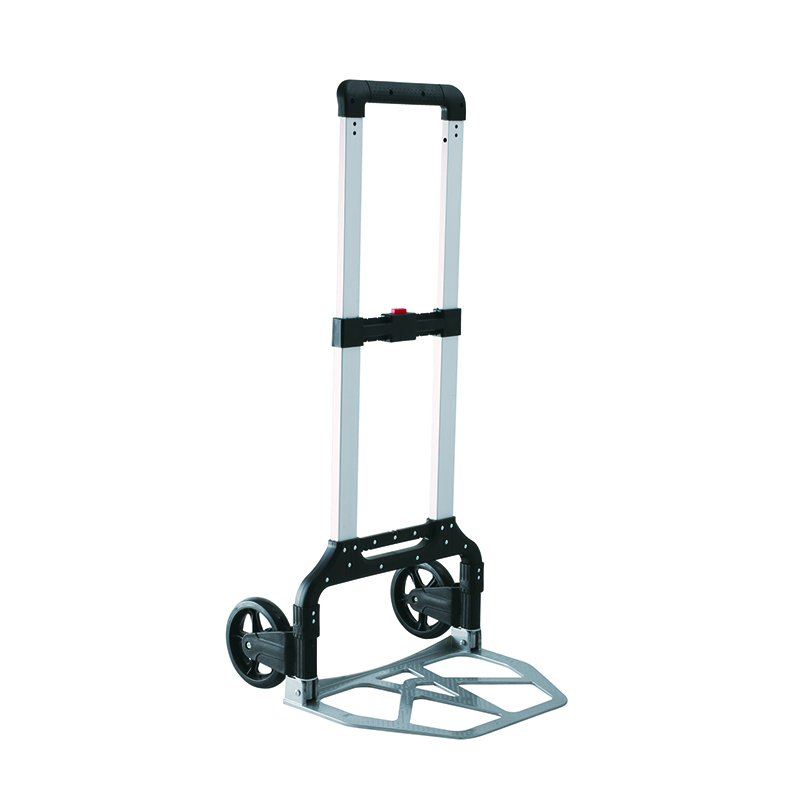
Evaluate an aluminum folding hand trolley for delivery drivers requiring portability and corrosion resistance. These models excel in route delivery because they weigh less and stow easily inside tight truck cabs.
Acknowledge the limitations of a foldable hand truck. They are highly scalable for mobile fleets and casual retail use. However, they typically feature lower weight thresholds and smaller nose plates. Do not use them for pallet breakdown or bulk industrial moving.
Tire maintenance directly impacts load stability. Ensure pneumatic tires are properly inflated. Uneven tire pressure causes the load to pull sharply toward the softer side. This imbalance leads to dangerous lateral tip-overs. Next, examine the nose plate. Verify the nose plate is deep enough to support at least 75% of the base box's footprint. If the box hangs too far off the front lip, it destabilizes the entire stack.
Physics dictates how well a stack behaves during transport. You cannot pile items randomly and expect them to remain stable. Following a rigid stacking framework prevents inventory damage. It also reduces physical strain on the operator.
Position the heaviest, most structurally sound boxes at the bottom. Push them completely flush against the back frame. This foundational layer anchors the entire load. It lowers the overall center of gravity significantly. Never place light or crushable cartons at the base. The compressive weight of upper tiers will crush fragile bottom boxes, causing the entire stack to collapse.
Proper alignment reduces the physical effort required to balance the load. Stack boxes so the collective weight rests directly over the axle when tilted. Avoid front-heavy stacks. A front-heavy load constantly pulls the operator forward, straining their shoulders and lower back. Conversely, a load leaning too far back places excessive weight on the handles. Achieving perfect balance over the wheels lets the axle do the heavy lifting.
Column stacking creates independent towers prone to toppling. Instead, alternate box orientations on each tier if sizes permit. This technique mirrors masonry work. It creates a unified, interlocking structure. An interlocked stack resists lateral shifting when you turn corners or hit floor bumps. It binds the independent cartons into a single, cohesive unit.
Operators must maintain clear visibility at all times. Cap the stack height at the operator’s chest level. Stacking above the frame’s crossbars eliminates the forward line of sight. Blindly pushing equipment invites collisions and trip hazards. Furthermore, an excessively tall stack drastically increases tipping risk. The higher you stack, the longer the lever arm becomes. This magnifies the force needed to control the load.
Gravity alone rarely keeps boxes secure during dynamic movement. Bumps, ramps, and sharp turns generate lateral forces. You must actively restrain the inventory. Choosing the right binding tool guarantees safe transit.
Different materials require different tension levels. Select your tie-down method based on the load's fragility and overall mass.
Comparison of Load Restraint Tools
Tool Type | Best Use Case | Primary Limitation or Risk |
|---|---|---|
Ratchet straps | Heavy, rigid loads requiring high tension. | Over-tightening easily crushes corrugated cardboard. |
Cam buckle straps | Medium loads needing secure but gentle hold. | Lacks the extreme tension needed for industrial steel parts. |
Bungee cords | Very light, non-commercial loads. | Snap-back hazards; strongly discouraged in commercial settings. |
Incorrect strap placement compromises the equipment. Anchor straps strictly to the rigid vertical frame of the hand trolley. Never hook straps to the movable handle, locking pins, or wheel guards. Tying off to moving parts damages the mechanical joints. It also allows the straps to loosen unexpectedly during transit. Run the straps horizontally across the middle of the boxes, pulling them tight against the backrest.
Sometimes you must move disparate, lightweight, or oddly shaped boxes. Apply stretch wrap around the entire stack before loading. Start wrapping from the base layer and overlap layers moving upward. This process binds individual boxes into a single solid block. It eliminates individual box ejection completely. Stretch wrapping proves especially useful for order fulfillment carts carrying dozens of small parcels.
Even perfectly stacked loads become dangerous if handled poorly. Operators must use proper biomechanics to move heavy inventory. Relying on leverage prevents musculoskeletal injuries. Navigating environmental obstacles requires patience and specific techniques.
Never yank the handles backward using only your arm strength. This action destroys your lower back. Instead, use the kick-and-tilt technique. Place one foot firmly on the axle or lower crossbar. Keep your back completely straight. Pull the handle backward while pushing your foot forward. This utilizes mechanical leverage rather than spinal exertion. The wheels act as a fulcrum, effortlessly lifting the load off the ground.
Gravity works against you on sloped surfaces. Always keep the load uphill. When moving up an incline, push the truck forward. When moving down a decline, walk backward. This orientation keeps the heavy boxes resting securely against the frame. It also prevents the cart from rolling away from you. Maintain strict control of the descent speed. Never let momentum dictate your pace.
Obstacles require a methodical approach. Approach curbs and stairs squarely at a 90-degree angle. Hitting a curb at an angle causes one wheel to catch, violently twisting the handles out of your grip. Lift the wheels over the obstacle one at a time. Use the leverage of the handles to pull the wheels up. Never attempt to lift the nose plate directly while it holds weight. Pull the cart up backward, stepping up first, then pulling the wheels over the ledge.
Individual knowledge only goes so far. Organizations must scale these practices across their entire workforce. Standardizing standard operating procedures (SOPs) ensures consistency. It protects both the employees and the bottom line.
The highest risk of inventory damage occurs when untrained staff bypass securing protocols to save time. Rushing through the loading phase inevitably causes accidents. Employees often skip using straps for "quick trips" across the warehouse floor. Management must address this behavioral shortcut. Safety protocols only work when enforced consistently across all shifts.
Create clear, written rules for material handling. Document strict rules regarding maximum stack heights. Establish mandatory strap usage for loads over a specific weight threshold. Require pre-shift equipment inspections. Operators should check tire pressure, frame integrity, and handle grips before moving their first load. Post these guidelines visibly near loading docks and equipment storage areas.
Regularly audit current injury reports and damage logs. Data reveals hidden equipment failures. If tip-overs are frequent, your current hardware might be inadequate for your inventory profile. Consider transitioning to models featuring wider wheelbases for enhanced lateral stability. You might also explore dual-handle designs. Dual handles offer better ergonomic control, allowing operators to steer heavy loads without twisting their wrists.
Secure stacking is a combination of applied physics, appropriate equipment selection, and rigid adherence to safety protocols. You cannot separate load stability from operator technique. By placing heavy items at the base, interlocking tiers, and utilizing proper restraints, you eliminate the primary causes of inventory damage. Furthermore, mastering leverage-based tilting protects your workforce from chronic injuries.
Audit your current material handling fleet immediately. Ensure weight capacities align with your heaviest common loads. Retire any equipment showing structural fatigue or compromised wheels. Finally, update employee training programs to mandate load restraints and proper incline navigation. Consistent enforcement of these standards transforms your logistics operations into a safer, highly efficient system.
A: Boxes should not overhang the nose plate by more than 25% of their total depth. Excessive overhang shifts the center of gravity forward, risking catastrophic tipping. If your inventory consistently exceeds this limit, you must upgrade to equipment featuring an extended nose plate.
A: No. Moving a loaded truck with one hand compromises balance and steering control. It significantly increases the risk of lateral tip-overs, especially on uneven terrain. Always keep both hands firmly on the grips to maintain leverage and react quickly to floor hazards.
A: Place the largest, heaviest irregular items at the base. Use void fill or moving blankets to square off the stack. Bind the entire load tightly with stretch wrap and vertical ratchet straps to unify the shape. This prevents smaller items from shifting or ejecting during transit.


