
Views: 0 Author: Site Editor Publish Time: 2026-08-27 Origin: Site


Field mechanics routinely face a frustrating daily grind. You constantly climb onto cluttered flatbeds. You compromise your workflow digging through disorganized piles of gear. The physical toll of stepping in and out of the truck bed adds up fast. Standard topside boxes create a major bottleneck. They consume critical payload space on the deck. You desperately need this room for large compressors, heavy welding equipment, or oversized replacement parts. Shifting storage below the deck solves this dilemma completely. An Underbody Truck Box reclaims your primary cargo area. It lowers the vehicle's center of gravity for safer driving. You keep essential tools readily accessible from ground level. This guide evaluates specific applications, material trade-offs, and true installation realities. Field technicians shortlisting below-deck storage solutions will find the precise standards required to optimize their service fleet.
Underbody boxes reclaim flatbed space for large equipment while keeping heavy hand tools accessible from ground level.
A heavy duty aluminum tool box reduces overall payload weight and resists road-salt corrosion better than traditional steel.
True weatherproofing requires evaluating automotive-grade D-bulb weather stripping, not just structural welds.
Proper installation requires assessing suspension travel and calculating exact bracket-to-frame clearance to prevent chassis damage.
Mechanics must balance available vehicle real estate carefully. You need ample room for bulky equipment. You also need organized storage for smaller hand tools. Topside crossbed boxes offer very easy access. However, they consume your primary cargo space. Your flatbed loses crucial square footage. Shifting your storage to an underbody mount frees up the deck entirely. This choice does limit your maximum box dimensions. You must accommodate axle movement and wheel clearance. The trade-off proves highly beneficial for heavy-duty service vehicles.
Layout Type | Access Speed | Payload Space Impact | Center of Gravity |
|---|---|---|---|
Topside Crossbed | Very Fast (Waist Height) | Consumes Primary Deck Space | Raises Vehicle Center of Gravity |
Underbody Mount | Fast (Ground Level) | Frees Up Deck Entirely | Significantly Lowers Center of Gravity |
Storing heavy items below the bed line changes vehicle dynamics. Heavy recovery chains weigh hundreds of pounds. Massive hydraulic jacks add significant localized mass. Keeping these items low improves driving stability. It lowers the entire truck's center of gravity safely. Heavily loaded service trucks handle sharp corners much better. You experience far less body roll on uneven terrain.
Ground-level accessibility provides immense ergonomic benefits daily. You avoid stepping onto the flatbed constantly. Retrieving frequently used diagnostic equipment becomes fast and painless. Grabbing heavy impact wrenches from waist height saves your lower back.
Ergonomic Benefits of Ground-Level Access:
Reduces repetitive strain injuries from climbing ladders.
Keeps technicians safely planted on the ground in high-traffic zones.
Minimizes dropping heavy tools from elevated truck decks.
Accelerates rapid deployment of emergency spill response gear.
Best Practice: Keep the tools you need most on the passenger side. You avoid standing in live traffic while accessing your gear.
Common Mistake: Buying the deepest box possible. You risk bottoming out on uneven job sites and damaging the structural frame.
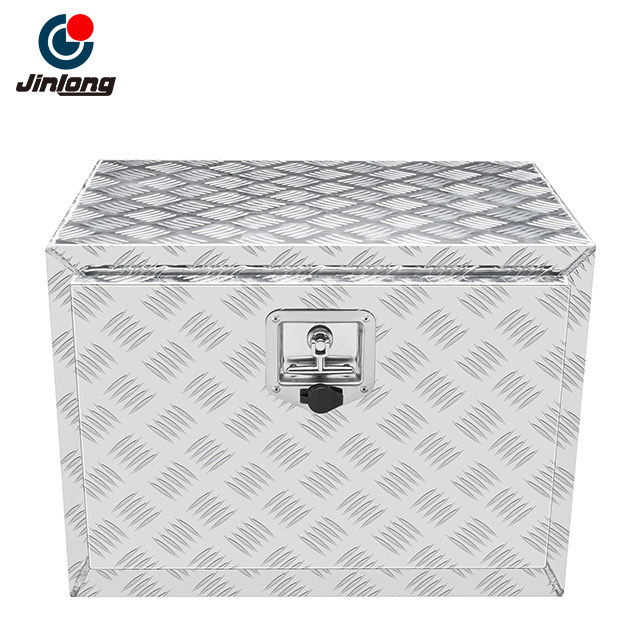
Technicians use below-deck compartments highly strategically. You must separate items based on use cases. You also evaluate contamination risks. Heavy recovery gear and heavy pneumatics fit perfectly here. You can store thick tow straps securely. Heavy transport chains stow away easily. Stowing wooden dunnage and long portable air hoses keeps the main deck clear. These items handle persistent road vibration well. They do not require strictly climate-controlled environments.
Spill kits and industrial lubricants require special handling protocols. You want to isolate messy or hazardous materials effectively. Grease tubes often leak profusely in the summer heat. Oil catch pans retain sticky residue after draining. Coolant jugs occasionally rupture from heavy impacts. Storing these items below deck keeps them away from clean diagnostic electronics. An Aluminum Tool Box makes an excellent containment vessel. You can wipe out grease easily. You never have to worry about the metal rusting afterwards.
Dedicated trade tool segmentation improves your overall job speed. You can use underbody compartments to separate specific tool categories. Standard mechanic tool sets go into one clean section. Specialized job-specific gear goes directly into another. For instance, you should always isolate delicate welding leads from oily hydraulic fittings.
Typical Segmentation Plan for Field Techs:
Primary Passenger Side: High-use impact tools, common sockets, and portable battery chargers.
Secondary Passenger Side: Tow straps, heavy recovery chains, and emergency hydraulic jacks.
Primary Driver Side: Specialized hydraulic fittings, high-pressure hoses, and precise brass crimpers.
Secondary Driver Side: Messy bulk fluids, large funnels, spill response kits, and waste oil containers.
Choosing the right material dictates the entire lifespan of your storage. The industry standard strongly favors aluminum for professional field technicians. The structural weight savings are completely undeniable. Steel boxes add unnecessary dead weight to your chassis. Frame weight savings translate directly into increased legal payload capacity. You can carry more crucial replacement parts. You can haul heavier specialized machinery on the deck.
A Heavy Duty Aluminum Tool Box resists road-salt corrosion highly effectively. Steel boxes often suffer from severe rust rot after just two harsh winters. Mud, road salt, and flying gravel impact the underbody daily. Aluminum naturally forms a tough oxide layer. This chemical layer prevents deep structural corrosion. However, aluminum remains physically softer than hardened steel. You must select heavier gauge construction materials. Look for .100-inch or .125-inch thick diamond tread. This heavy thickness resists denting from high-speed road debris.
Structural integrity relies heavily on modern construction methods. You should demand continuous TIG welds over cheap spot welding. Spot welds often crack under persistent stress. Continuous welds bind the aluminum panels into a solid, rigid unit. These boxes endure severe daily vibration on unpaved job sites. Poor welds will inevitably crack. They will let destructive moisture inside your compartments.
Best Practice: Inspect the interior corner welds carefully before installation. They must show consistent, uniform weld beads without any pinholes.
Your diagnostic tools and power equipment represent a massive financial investment. Protecting them from foul weather and theft is non-negotiable. Clarifying the strict definition of "waterproof" matters greatly. A true Waterproof Underbody Truck Box relies on multiple engineered features. It utilizes automotive-grade D-bulb or neoprene weather stripping. The box must feature a sharply extruded door channel. This specific channel routes water safely away from the primary rubber seal. No box is completely submarine-proof. You must acknowledge the reality of high-pressure power washing. Seals must withstand standard road spray. They must repel heavy rainfalls. Directing a pressure washer precisely at the seal might force moisture inside.
Latch mechanisms directly determine seal effectiveness. T-handle latches remain common. They push the latch tongue strictly behind the metal frame. Cam-over latches provide vastly superior functionality. They actively pull the heavy door tightly against the weather seal. This mechanical action creates immense compression on the D-bulb. It provides superior moisture resistance instantly. It also eliminates annoying metal rattle while driving.
Theft deterrence requires highly specific structural upgrades. You must evaluate lock cylinders for drill resistance. Reinforced door spines prevent the outer door skin from bending. Concealed hinges eliminate a major structural vulnerability point. Thieves cannot simply grind off the external hinge pins. A recessed door design physically prevents thieves from gaining leverage. A steel pry bar cannot easily catch the edge of a properly recessed door.
Installing below-deck storage requires precise mechanical planning. You cannot just bolt a heavy box anywhere. Clearance calculations dictate the entire installation process. You must measure the exact available frame space. Techs must account for maximum suspension travel vertically. Rear axles move upward significantly when hitting deep potholes. Allow at least 6 to 8 inches of upward axle travel. You must note fuel tank locations carefully. Check plumbing routes and electrical harnesses. Turning radiuses require special attention. Boxes mounted near front wheels cannot interfere with steering angles.
Mounting brackets carry the entire payload weight. We strongly advise against drilling directly into the truck frame. You should only drill if strictly compliant with chassis upfitter guidelines. Drilling weakens the high-tensile steel frame permanently. We highly recommend heavy-duty bolt-on L-brackets. Custom gusseted brackets provide exceptional vertical support. They clamp tightly around the frame rails safely.
Vibration mitigation extends the operational life of your storage. Rigid metal mounts transfer road shocks directly into the aluminum box. We highly suggest using dense rubber isolators. Place them directly between the box and the mounting bracket. These thick rubber pads absorb high-frequency vibrations effectively. They prevent severe aluminum fatigue cracking over time.
Common Mistake: Using standard zinc-plated hardware for installation. Always use stainless steel bolts. They prevent galvanic corrosion against the aluminum box.
Shifting your primary storage to the underbody remains a highly strategic decision. It maximizes the utility of your service truck instantly. You improve daily ergonomics by keeping heavy gear low. You also stabilize the entire vehicle by optimizing weight distribution. Proper material selection ensures decades of reliable service.
Next Steps for Buyers:
Accurately measure your under-bed clearance, fully accounting for maximum suspension compression.
Weigh your heaviest gear loads carefully to determine required bracket ratings.
Prioritize heavy-gauge diamond tread aluminum to effectively resist flying road debris impacts.
Specify robust cam-over latches to ensure long-term compression against the weather seals for maximum ROI.
A: Yes. Selecting a box that is too deep can cause bottoming out on uneven job sites. Always measure from the bottom of the truck bed to the highest point of suspension travel, ensuring at least 10–12 inches of ground clearance remains.
A: Yes, provided it is a commercial-grade, heavy duty aluminum tool box (typically .100-inch thickness or greater). It matches the structural needs of most gear while saving significant payload weight compared to steel.
A: Moisture usually enters through failed seals or lock cylinders. Ensure the box uses high-quality D-bulb weather stripping, keep latches properly adjusted to maintain seal compression, and consider adding silica gel packs to manage internal condensation caused by temperature swings.


