
Views: 0 Author: Site Editor Publish Time: 2026-08-11 Origin: Site


Modern logistics operations face a relentless operational friction. Managers must balance heavy-duty material handling demands against highly constrained floor space. Traditional facilities could afford massive storage rooms. Today, every square foot dictates profitability. To adapt, many aggressive supply chains now shift toward modular equipment. Bulky, rigid transport carts still dominate open, bulk loading docks. However, innovative foldable variations actively solve complex last-mile bottlenecks. They excel on crowded retail shop floors. They easily navigate tight-clearance zones inside urban warehouses. Selecting the optimal transport device requires rigorous evaluation. You must analyze specific load dynamics meticulously. Environmental constraints demand attention. Narrow retail aisles require completely different maneuverability than sensitive server rooms. You must also assess material durability to ensure strong financial returns. Proper selection guarantees worker safety. It keeps daily agility intact.
Foldable hand trucks maximize storage efficiency but require strict adherence to stated dynamic load limits to prevent hinge failure.
Retail environments benefit most from an Aluminum Foldable Trolley due to aesthetic requirements, lightweight maneuverability, and non-marking wheels.
Industrial or IT deployment (e.g., server moves) demands a Steel Folding Trolley or a convertible Platform Truck to handle concentrated, unbalanced loads.
Evaluation must prioritize wheel composition (pneumatic vs. polyurethane) and locking-mechanism integrity over generalized weight capacities.
Many facility managers ignore the hidden costs of rigid equipment. Standard welded carts consume massive amounts of dead storage space. Delivery vehicles lose valuable cargo room to empty equipment. Backrooms quickly become hazardous, cluttered zones. These bulky frames severely limit deployment agility. Workers often leave them stranded in distant warehouse corners. Businesses desperately need equipment they can deploy instantly. A well-designed Foldable Hand Truck offers immense structural value here. We define its ultimate success by balancing pure space savings against reliable structural compromise.
You must never sacrifice physical safety for portability. High-quality folding mechanisms lock into place securely. They handle daily strain effectively. They then fold away into narrow gaps between storage racks. Ergonomics also play a vital role. Musculoskeletal disorders remain a top cause of lost workdays. Providing accessible, collapsible tools directly at the point of need changes worker behavior. It strongly encourages staff compliance. Workers naturally follow safe-lifting protocols when proper tools sit nearby. This simple convenience reduces workplace injuries significantly. It keeps your staff healthy, motivated, and productive throughout their shifts.
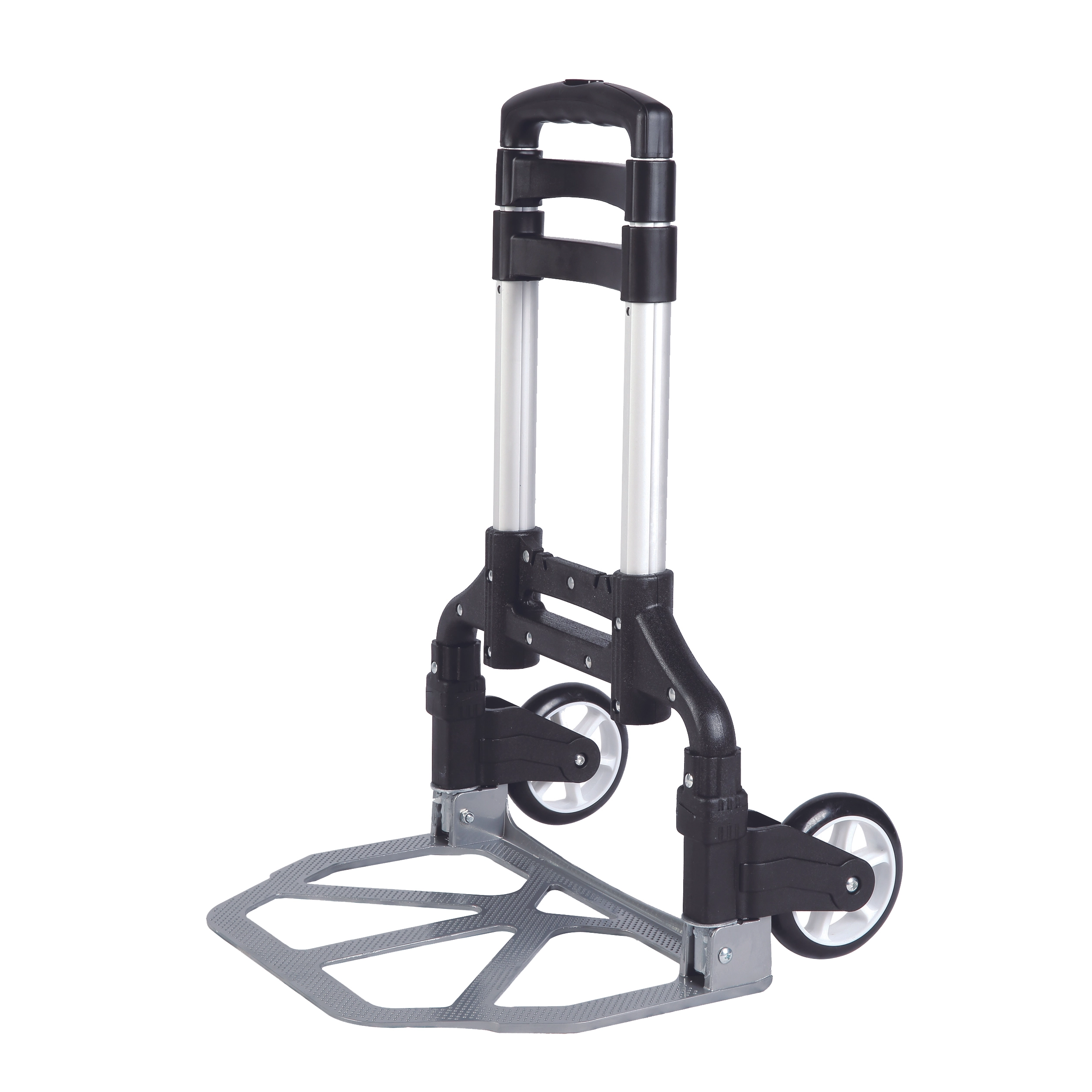
Retail environments thrive on fast, seamless floor movement. Navigating narrow product aisles during peak operational hours presents constant challenges. Bulky equipment frustrates shoppers. It blocks expensive promotional displays. Foldable units feature a highly compact physical footprint. They allow staff to restock shelves discreetly during regular operating hours. Employees move heavy inventory quickly without blocking customer traffic. They maintain a safe, welcoming shopping environment.
Last-mile delivery drivers also benefit tremendously from modular tools. Drivers need highly reliable equipment to transport heavy residential parcels. However, traditional fixed-frame carts consume highly valuable payload space. A folding unit simply collapses flat in seconds. It fits easily into standard delivery vans. It slides under shelving inside box trucks. This clever design frees up space for more revenue-generating cargo packages.
Event hosting and seasonal staging offer another ideal application. Retail promotional displays change constantly during major holiday seasons. Inventory spikes dramatically in November and December. Foldable models deploy instantly to move this temporary seasonal inventory. Once inventory volume normalizes in January, staff simply stow them away. They keep retail backrooms clean, compliant, and highly organized.
Industrial settings demand incredibly robust handling solutions. IT and server room navigation presents highly specific technical pain points. Server racks carry immense weight. They house highly sensitive, expensive data equipment. Moving them safely through standard office doors often proves exceptionally difficult. Standard bulky equipment frequently fails to clear tight door thresholds. Modular folding designs easily maneuver through normal doorways. They protect valuable hardware from damaging vibrations.
Mezzanine storage and multi-level picking also require extreme agility. Standard pallet jacks cannot navigate stairs. Warehouse staff easily transport collapsible units via small passenger or service elevators. They can even manually carry folded carts up to secondary warehouse levels safely. This capability provides instant material handling support where heavy motorized machinery simply cannot reach.
Eventually, operations reach a physical volume threshold. A standard vertical design becomes completely insufficient for safe transport. You must identify exactly when to upgrade your equipment profile. A heavy-duty foldable Platform Truck becomes absolutely necessary for bulky cargo. Odd-shaped loads demand flat stabilization. It provides a wide, four-wheel staging area. This safely supports palletized partial loads. It entirely prevents dangerous tipping scenarios during rapid transport.
Material choices directly dictate equipment lifespan. They define optimal use cases for your facility. You must align your material selection strictly with your daily operational demands. Choosing poorly results in broken equipment and wasted budgets.
A commercial-grade Aluminum Foldable Trolley provides several distinct operational advantages. It offers excellent natural corrosion resistance. It features an exceptionally lightweight frame. Its visually clean, bright appearance fits perfectly in customer-facing settings.
Pros: Impervious to rust, highly maneuverable, and extremely easy for staff to lift overhead.
Ideal use cases: Retail store restocking, daily parcel delivery routes, and stringent medical clean-room environments.
Limitations: Aluminum carries a naturally lower threshold for blunt impact damage. It may suffer cumulative metal fatigue under maximum weight stress over time.
Conversely, a rugged Steel Folding Trolley easily handles intense daily abuse. It delivers incredibly high tensile strength. It resists frame deformation beautifully under heavy, constant static loads.
Pros: Unmatched structural rigidity, superior load-bearing capacity, and highly resistant to daily warehouse impacts.
Ideal use cases: Rough concrete warehouse floors, heavy IT equipment moves, and industrial automotive parts handling.
Limitations: Steel carries a significantly heavier empty weight. It remains susceptible to aggressive rust if the protective powder coating chips off.
Feature Category | Aluminum Models | Steel Models |
|---|---|---|
Weight Profile | Ultra-lightweight | Heavy and dense |
Corrosion Resistance | Excellent (Natural) | Moderate (Requires coating) |
Maximum Load Threshold | Moderate capacity | High capacity |
Visual Appeal | Clean, modern look | Industrial, rugged finish |
Selecting the perfect transport model involves looking far past basic marketing claims. Evaluating real-world load capacities remains highly critical. We warn buyers against trusting static load marketing metrics blindly. You must evaluate any equipment based strictly on dynamic load physics. Moving heavy, stacked boxes over concrete bumps multiplies the physical stress. Rolling over uneven doorways impacts the folding hinges severely.
Wheel base design and tire composition demand careful, strategic review:
Solid Polyurethane: These remain the absolute best choice for smooth retail floors. They require zero maintenance. They never go flat. They resist flat spots even when stored under heavy loads.
Pneumatic Air-filled: These become entirely necessary for outdoor, uneven terrain. They provide excellent shock absorption for fragile goods. However, they introduce constant puncture risks. They require ongoing inflation maintenance to perform correctly.
Nose plate dimensions must closely match your typical cargo. You should match the physical depth and width of the folding nose plate to your standard box sizes. An undersized nose plate creates severe instability. A properly sized container footprint actively prevents dangerous lateral load tipping.
Hinge strength and locking mechanisms secure the entire frame. We strongly emphasize the vital importance of positive-locking structural joints. High-quality steel pins prevent accidental folding during transport. Cheap friction locks fail frequently and cause serious workplace injuries.
Load Capacity Metric | Definition | Purchasing Guideline |
|---|---|---|
Static Load | Maximum weight held while entirely stationary. | Ignore for daily operational planning. |
Dynamic Load | Maximum weight supported while moving over terrain. | Use this metric to size your fleet. |
Shock Load | Sudden force from dropping weight onto the plate. | Subtract 20% from dynamic load for safety margins. |
Every modular mechanical design involves a fundamental durability trade-off. We must remain entirely transparent regarding equipment lifespans. Moving parts inherently introduce potential points of failure. Foldable units have a naturally shorter lifespan than single-weld rigid trucks. If staff abuse them daily, they will inevitably fail faster. You must align your financial expectations with actual warehouse usage.
Adoption friction occurs very frequently during initial fleet rollouts. Staff may overload light foldable units if heavy rigid alternatives remain unavailable. They prioritize speed over equipment safety. We strongly recommend applying strict load-rating warning labels. Place them directly on the handles for high visibility. Proper initial training ensures employees deeply understand material limits.
Establishing strict ongoing maintenance protocols extends equipment life dramatically. Ignoring maintenance destroys your investment rapidly. Follow this essential preventative schedule meticulously:
Lubricate folding hinges regularly: Apply high-grade industrial silicone spray to all folding joints. Do this strictly on a monthly basis.
Check internal wheel bearings: Clear out floor debris, stray shrink wrap, and cardboard dust. Clean the axel area to ensure smooth, frictionless rolling.
Inspect locking pins thoroughly: Test the mechanical positive-locking mechanism weekly. Ensure internal springs engage fully without sticking or grinding.
A folding transport cart serves as a highly specialized logistical tool. It provides unmatched operational agility. It offers massive space-saving benefits for tight environments. It is not, however, a universal replacement for heavy-duty rigid handling. You must apply careful shortlisting logic to protect your operations. Always align the structural material and physical form factor with your specific aisle widths. Consider your precise daily load averages before finalizing any bulk purchase. We strongly encourage you to audit your backroom storage space today. Calculate your average parcel weights accurately across different shifts. Finally, consult directly with a dedicated material handling specialist. Test a specific unit in your exact operating environment. This guarantees optimal performance and total worker safety.
A: Advertised capacity often reflects static load. This represents the weight a cart holds while entirely stationary. Safe working load accounts for dynamic forces. Moving across bumps multiplies structural stress. We highly advise buyers to stay fifteen to twenty percent under the maximum marketed capacity for intense daily use.
A: Most standard folding models struggle with constant stair usage. Unless equipped with specialized stair-climbing tri-wheels, stair navigation causes damage. Dragging heavy loads up steps places immense sheer stress directly on the folding hinges. Rigid frames handle this specific rough impact much better.
A: You need a platform truck for horizontally distributed cargo. Wide appliances or multiple stacked storage totes exceed standard capacities. They extend far past the narrow vertical footprint of a standard hand truck. Platform models provide essential four-wheel stability for these awkward, bulky shapes.
A: You must verify this directly with the manufacturer before purchasing. Many cheap retail models feature riveted joints. They cannot be repaired easily once broken. High-quality commercial-grade models utilize modular hardware. They offer easily replaceable wheels, springs, and locking pins to extend their lifespan.


