
Views: 0 Author: Site Editor Publish Time: 2026-08-24 Origin: Site


Modifying a pickup truck or utility trailer often comes down to maximizing payload while simultaneously securing high-value gear. We know cargo space remains constantly at a premium during transit. Standard truck bed toolboxes consume valuable cargo space rapidly. Plastic or thin steel storage solutions leave expensive tools, batteries, and tie-downs highly vulnerable. They simply cannot withstand determined thieves or harsh weather environments over time. A dedicated trailer tongue box utilizes the dead space on the A-frame beautifully. It shifts your equipment forward, freeing up your main truck bed completely. However, the exact material and security features you choose matter greatly. They dictate whether your new storage functions as a long-term asset or just a temporary fix. We will explore how to select the right materials and avoid common installation mistakes. You will learn how to maximize your hauling efficiency and protect your gear permanently.
Optimal Weight-to-Strength Ratio: Aluminum construction preserves your vehicle's towing payload and tongue weight limits while resisting corrosion.
High-Security Storage: A lockable trailer tongue box provides job-site and transit security for batteries, hydraulics, and expensive gear.
Space Maximization: Utilizes the typically wasted A-frame space without impeding turning radius or tailgate clearance.
Installation Precision: Proper sizing and mounting are critical to avoid interference with trailer jacks, winches, and weight distribution hitches.
We often see haulers struggle daily for adequate storage space. Shifting gear to the A-frame solves this problem instantly. It frees up the main truck bed for your primary cargo. Landscapers desperately need this bed space for mowers and organic debris. Overlanders require ample room for sleeping setups and large water tanks. RV owners need clearance for generators and camping supplies. A dedicated Trailer Tongue Box reclaims this wasted real estate efficiently. You gain valuable storage capacity immediately. It achieves this without extending your vehicle's overall footprint or compromising rear visibility.
Let us closely compare the three most common storage materials.
Weight: Aluminum delivers excellent heavy-duty performance effortlessly. It does not add unnecessary dead weight to your hitch. This matters significantly because excess hitch weight reduces your safe towing capacity.
Corrosion Resistance: Aluminum naturally resists rust completely. Steel boxes quickly show rust spots after minor surface scratches. Constant weather exposure demands a completely rust-proof solution.
Durability: Plastic boxes often warp under intense UV exposure. They also crack easily during freezing temperatures or unexpected road impacts. Aluminum maintains strict structural integrity across all extreme climates.
Material Type | Weight Impact | Corrosion Resistance | Overall Durability |
|---|---|---|---|
Aluminum | Low (Preserves Payload) | Excellent (Naturally Rust-Proof) | High (Resists Impacts & Weather) |
Steel | High (Reduces Towing Capacity) | Poor (Prone to Rusting) | High (Strong but Heavy) |
Plastic | Very Low | Excellent (Cannot Rust) | Low (Warps & Cracks Easily) |
What actually makes a storage box genuinely heavy-duty? We look for specific manufacturing benchmarks. The aluminum gauge should measure strictly between .056 inches and .063 inches. Thinner metal dents too easily under shifting interior cargo. Thicker metal adds unnecessary bulk. You must also inspect the seams carefully. Manufacturers should fully weld every exterior joint. Spot welding leaves tiny gaps where moisture inevitably penetrates. Fully welded seams guarantee a rigid, watertight enclosure.
Leaving gear unattended carries significant financial risk today. Job sites, remote trailheads, and crowded RV parks attract opportunistic thieves constantly. You cannot always keep a watchful eye on your trailer. High-value items demand serious physical protection. Hydraulic pumps, deep-cycle batteries, and heavy power tools represent massive investments. Thieves target these items because they sell quickly. Unsecured or poorly secured boxes invite immediate theft.
Your storage is only as secure as its primary latch. We recommend evaluating stainless steel paddle latches over standard rotary locks. Paddle latches offer a sleeker profile and superior mechanical leverage. Recessed locking hardware remains absolutely crucial. When latches sit flush against the exterior face, thieves cannot easily grip them. Recessed designs also prevent your clothing or cargo straps from snagging accidentally. A flush design limits leverage points for physical attacks.
A sturdy lock means nothing if the lid bends easily. Pry-bar attacks remain the most common forced entry method. You need a Lockable Trailer Tongue Box featuring a fully reinforced lid. Hidden or continuous piano hinges stop thieves from knocking out hinge pins. Heavy-duty striker plates ensure the latch mechanism stays engaged securely. They resist extreme upward pressure during a pry-bar assault. Rigid interior channels reinforce the lid against bending forces.
We must remain realistic regarding physical security measures. No box is completely invincible to a determined thief carrying heavy power tools. Angle grinders can eventually breach any commercial metal enclosure. However, a high-quality lockable box creates a massive visual and physical deterrent. It requires too much time and creates too much noise to breach quickly. This effectively prevents almost all random crimes of opportunity.
Protecting electrical gear from water and dust is essential. Rain and aggressive road spray will penetrate poorly sealed lids easily. We evaluate automotive-grade EPDM weather stripping highly. EPDM rubber resists compression set and long-term UV degradation. Many budget boxes use cheap foam seals initially. A common best practice involves upgrading these foam seals immediately. You can easily peel off the cheap foam and apply dense rubber weather stripping. This small modification dramatically improves water resistance.
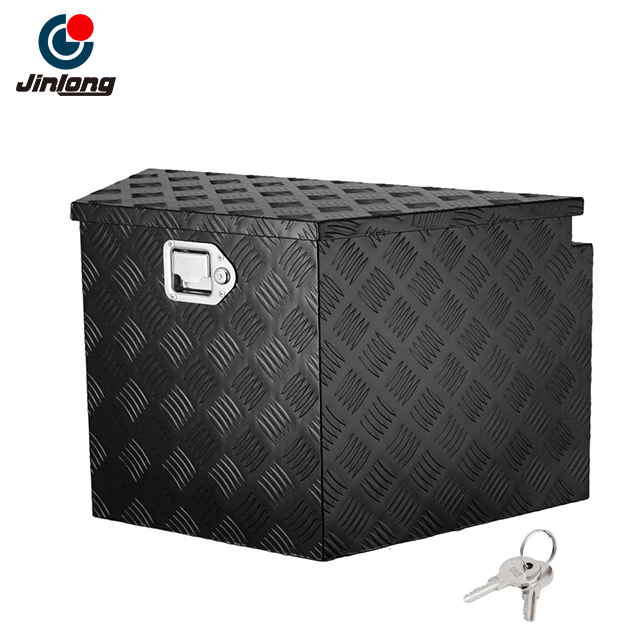
The classic diamond tread pattern serves a vital structural purpose. It is never just an aesthetic manufacturing choice. A Aluminum Trailer Tongue Box uses this raised pattern to increase surface rigidity. The geometric bends in the diamond plate disperse localized impacts effectively. This prevents heavy dropped wrenches or flying road debris from denting the exterior walls. The textured surface also resists visible scratching better than smooth aluminum.
Look closely at the specific construction techniques used. TIG-welded seams provide cleaner, much stronger joints than standard MIG welding. They ensure a completely watertight and durable enclosure. You should also look for heavy-duty gas struts. Gas struts provide controlled, smooth lid opening. They prevent the heavy lid from slamming shut on your hands unexpectedly. More importantly, strong struts prevent the lid from flopping backward and stressing the hinge joint.
You must calculate the necessary mounting gap carefully. Measure the exact distance between the box and your tow vehicle’s bumper. Tight reversing maneuvers require ample turning clearance. Jack-knifing a trailer can easily crush an improperly mounted box.
Follow these steps to measure accurately:
Park your tow vehicle and trailer in a perfectly straight line.
Measure the baseline distance from the hitch ball to the vehicle bumper.
Turn the tow vehicle slowly to a sharp 45-degree angle.
Verify at least six inches of clearance remains between the box corner and the bumper.
Hand-crank trailer jacks cause frequent installation frustrations. You must ensure the jack handle clears the box lid completely. Check this clearance during a full 360-degree handle rotation. Weight distribution hitch brackets also consume valuable A-frame space. You might need to relocate breakaway battery boxes or wiring harnesses. Plan your entire layout meticulously before buying any permanent hardware.
You have two main choices for securing your equipment. U-bolt bracket systems offer the safest overall mounting method. Direct frame drilling remains the popular alternative.
Implementation Risk: We strongly advise against drilling into structural trailer frames. Drilling holes can immediately void your manufacturer warranties. It also weakens the structural integrity of the steel A-frame permanently. We recommend using non-destructive mounting hardware whenever possible. Heavy-duty U-bolts clamp securely around the frame without altering the underlying steel structure.
Your specific daily activities dictate the ideal box design.
Commercial and Landscaping: Prioritize maximum interior volume above all else. You need extra heavy-duty latches to survive daily abuse from work crews.
RV and Camper: Prioritize lower-profile angled designs. The box must comfortably clear drop-down beds or front panoramic windows.
Utility and General Towing: Balance your upfront costs against basic weatherproofing needs. You likely just need simple, dry storage for straps and wheel chocks.
Evaluate the upfront cost of premium aluminum units carefully. Compare this directly to the recurring replacement costs of cheaper alternatives. Rusted steel boxes require frequent sanding, priming, and repainting. Cracked plastic boxes require complete, frustrating replacements. A Heavy Duty Aluminum Tool Box demands a slightly higher initial investment. However, it outlasts multiple budget boxes over a decade of heavy use. It provides superior value over its long lifespan.
Grab your measuring tape before finalizing any purchase. Measure your A-frame's available width, depth, and vertical height carefully. Confirm your exact jack style and map its handle rotation path. Match these specific measurements against the manufacturer's published exterior dimensions. Taking ten minutes to measure now prevents costly return shipping later.
Investing in an aluminum trailer tongue box solves two major hauling problems simultaneously. It eliminates spatial inefficiency while fixing critical gear vulnerability. You reclaim your main truck bed and secure your valuable equipment effectively. We consider a high-quality, weather-sealed box a permanent, worthwhile upgrade. It protects your expensive gear effortlessly across all seasons. It heavily enhances your overall towing utility and peace of mind.
Grab a tape measure and document your exact A-frame dimensions today.
Identify any potential physical interference from your trailer jack or winch handle.
Select a fully welded aluminum model to prevent rust and corrosion entirely.
Compare top-rated heavy-duty models based on your specific volume and security needs.
A: It can, depending on the box depth and your jack placement. Always measure the exact distance from the jack handle's rotation path to the mounting location before purchasing. Look specifically for notched or low-profile designs if your A-frame space is extremely tight.
A: Most heavy-duty models are highly weather-resistant but not completely submersible. Quality boxes use closed-cell rubber weather seals to effectively keep out heavy rain and road spray. Upgrading factory foam seals to automotive-grade EPDM rubber provides the best protection against moisture.
A: Bolting using heavy-duty brackets or U-bolts remains the industry standard. Welding aluminum directly to a steel trailer frame is impossible without specialized transition materials. Furthermore, direct drilling can sometimes compromise the trailer's structural warranty and weaken the A-frame over time.
A: Look for aluminum thicknesses between .056 inches and .063 inches. Anything thinner is highly prone to denting from shifting heavy tools. Anything thicker adds unnecessary weight and is generally reserved for custom industrial applications.


